
Discovery
Found a Weird Rock on Your Hike? Here's How a Rock Identifier App Actually Figures Out What It Is
Rock Identifier scans a photo of any stone, mineral, or crystal and returns an instant identification with hardness, origin, and value details, built for hikers and rockhounds alike.
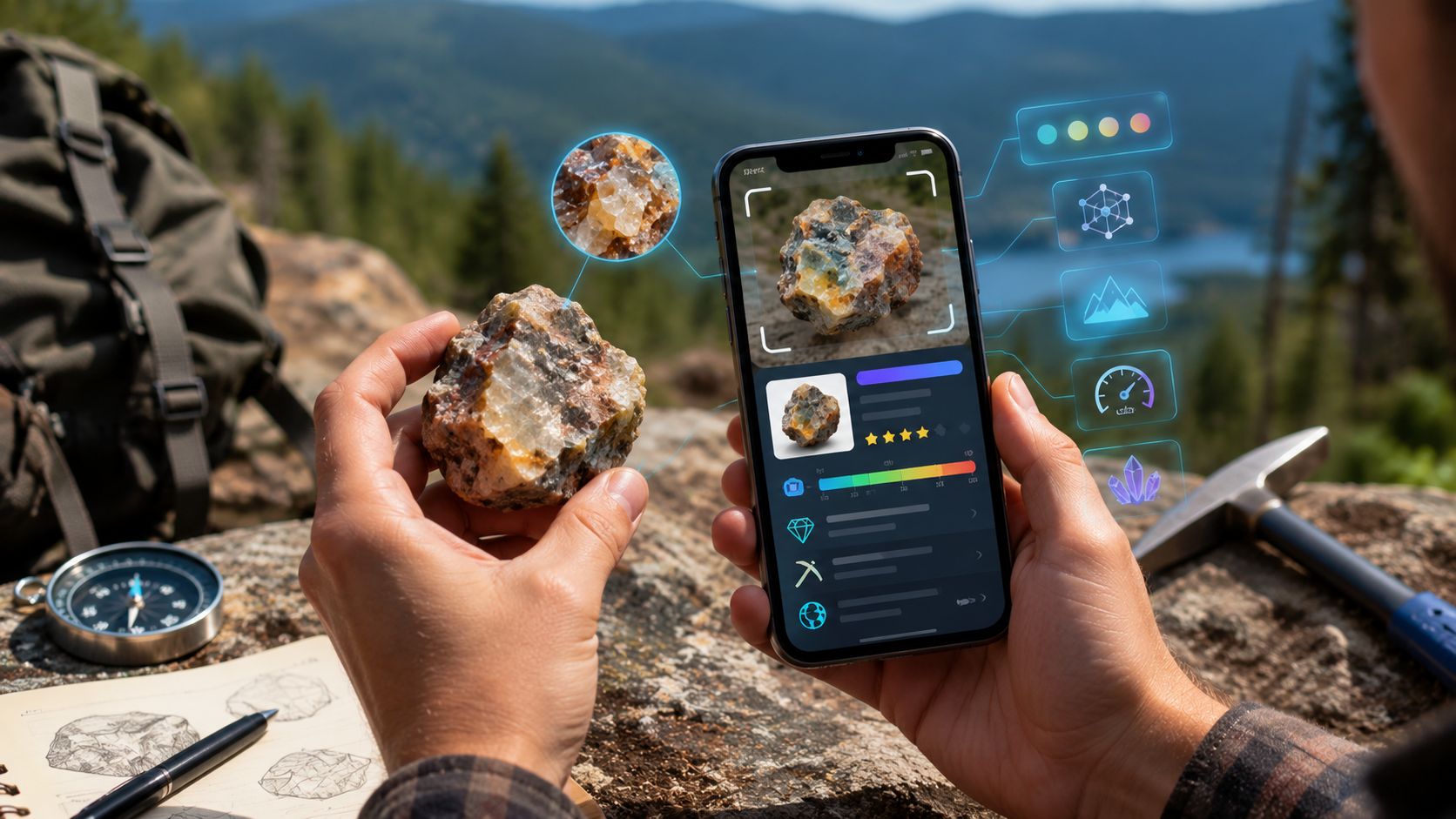
About this app
Every hiking trail eventually produces the same moment: someone picks up a rock that looks slightly too shiny or too strange to just be a rock, turns it over a few times, and asks the group if anyone knows what it actually is. Nobody ever does. Rock Identifier: Gem & Crystal exists for exactly that gap — point the camera at a stone, mineral, or gem, and it reads texture, color, grain, and crystal structure to return an identification with a confidence score attached, rather than a guess dressed up as a fact.
What You Actually Get Per Rock
- Instant photo-based identification — snap a photo of a rough stone, polished gem, mineral, or crystal and get a result in seconds rather than paging through a field guide.
- Mohs hardness and rock type — each result includes the mineral family and hardness rating, the kind of detail an actual geology reference would give you.
- Formation and origin hints — a sense of how and where a rock or mineral typically forms, adding context beyond just a name.
- Gemstone value and rarity info — useful if you've found something that might be worth more than a paperweight.
- A personal collection log — every identified rock, mineral, crystal, or fossil gets saved and organized by category so your discoveries build into an actual archive over time.
Who This Is Actually For
This one leans toward hobbyists more than professional geologists — students, hikers, and crystal collectors will get the most out of it, while a working geologist will still want lab equipment for anything that actually matters. It's free with ads and in-app purchases, rated for everyone, which fits a tool that's as much about curiosity as expertise. Photo-based identification also has real limits: lighting, angle, and surface condition all affect accuracy, so treat a result as a strong lead rather than a lab certificate, especially for anything you're about to sell as a gemstone.
The next time a strange rock turns up on a trail or beach, the difference between wondering forever and actually knowing what's in your hand comes down to whether you've got this open by the time you pick it up. Discovery is more fun with an answer attached.